
- Posted by:
- Category: News
Advancing Micro-Credentials for lifelong learning in Lesotho
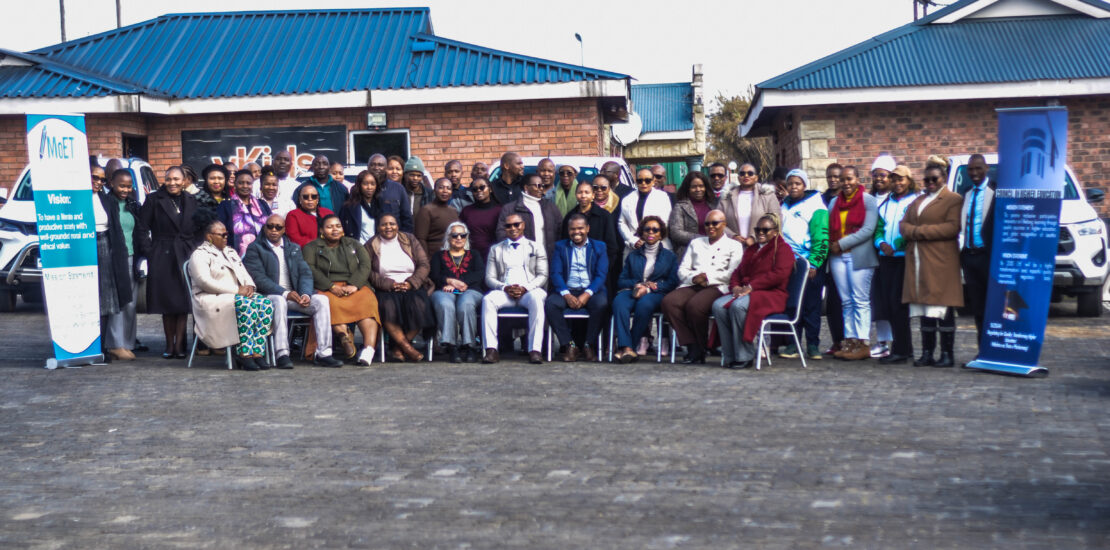
Council on Higher Education continues to take meaningful steps towards strengthening its education and training system through the adoption of innovative and flexible learning approaches. From 22 to 24 June 2026, stakeholders gathered at Victory Hall in a consultative workshop for development of a National Framework for Micro-Credentials, an important milestone in aligning global best practices with national priorities.
The workshop was facilitated by an internationally renowned consultant Professor Kirti Menon, bringing valuable international expertise and insights. Her contribution helped guide discussions on how Lesotho can effectively develop, implement, and sustain a micro-credential framework that is responsive to the country’s socio-economic needs.
Strengthening alignment with the Lesotho Qualifications Framework (LQF)
Alignment of micro-credentials to the LQF is of paramount importance. Thus, the discussions emphasised the centrality of mapping micro-credentials to national qualification systems to ensure that learning achievements are formally recognised and transferable. There are two categories of microcredentials, those that are attached to the LQF, and therefore which are credit-bearing, and those that are non-credit bearing. The credit bearing microcredentials are further categorised into those that are stackable into a full qualification, and those that are stand-alone and not leading to a qualification. Microcredentials are going to:
- Improve skills of the workforce in different sectors through specific and targeted credit-bearing training initiatives;
- Enable learners to accumulate credits towards formal qualifications
- Improve recognition of short courses and skills-based learning
- Promote seamless progression within the education and training system
The framework underscores the importance of recognising learning from formal, informal, and non-formal environments, ensuring that individuals’ diverse learning experiences are valued and accredited.
Building a future-ready education system
The stakeholder engagement also emphasised the role of micro-credentials in strengthening Lesotho’s education and training ecosystem. By integrating these flexible learning pathways, the country can address skills gaps, support economic development, and create more inclusive opportunities for all learners.
Key principles discussed included:
- Ensuring quality assurance and credibility of micro-credentials
- Promoting stackability, allowing learners to combine credentials toward higher qualifications
- Encouraging collaboration with industry and training providers to meet labour market demands
- Supporting digital learning and credentialing systems for accessibility and mobility
A shared vision for lifelong learning
The workshop marked an important step forward in Lesotho’s journey toward a more inclusive, flexible, and responsive education system. Through collaborative engagement with stakeholders, policymakers, and international experts, the country is laying a strong foundation for implementing micro-credentials in a way that directly benefits its people.

